
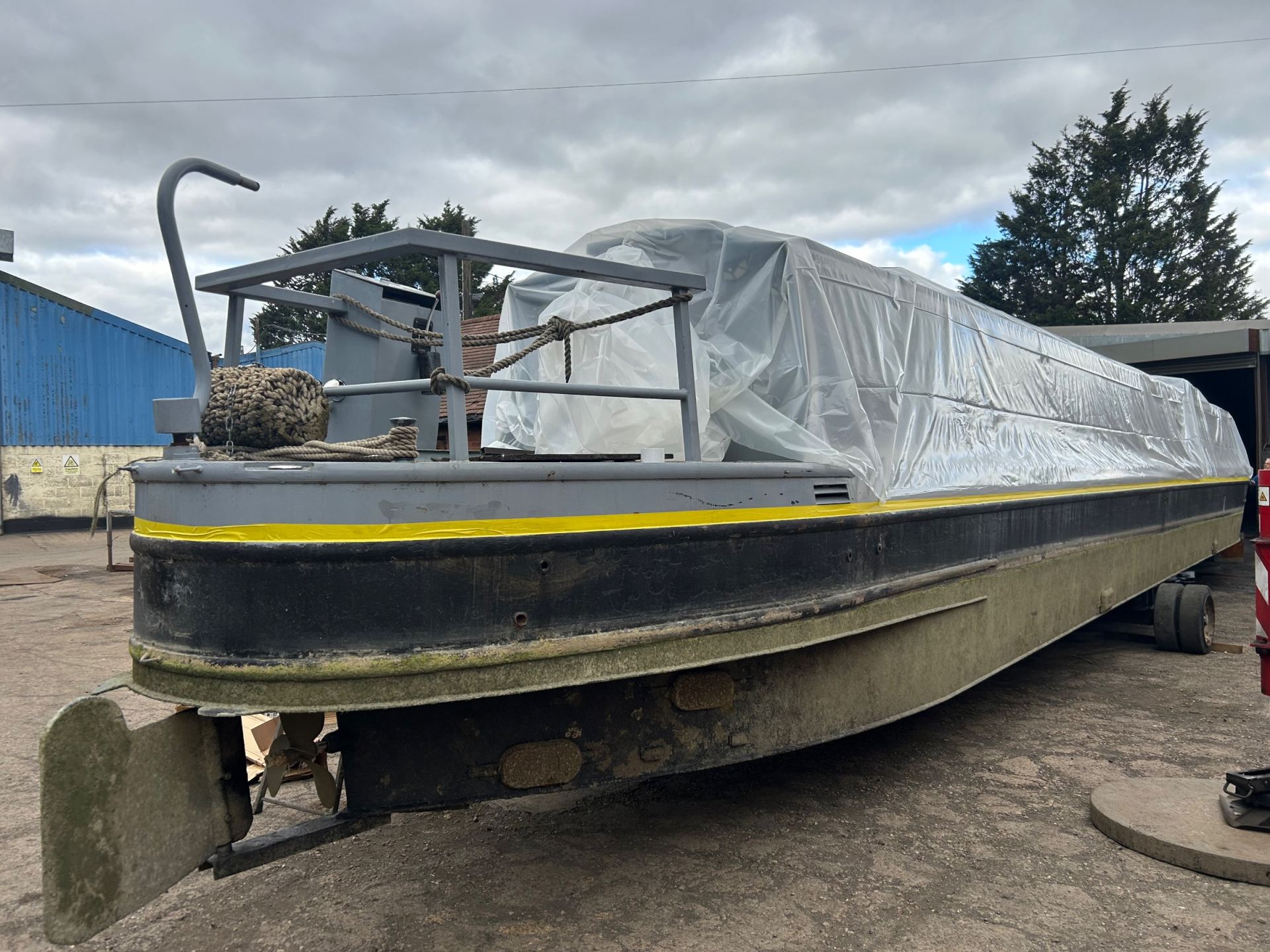
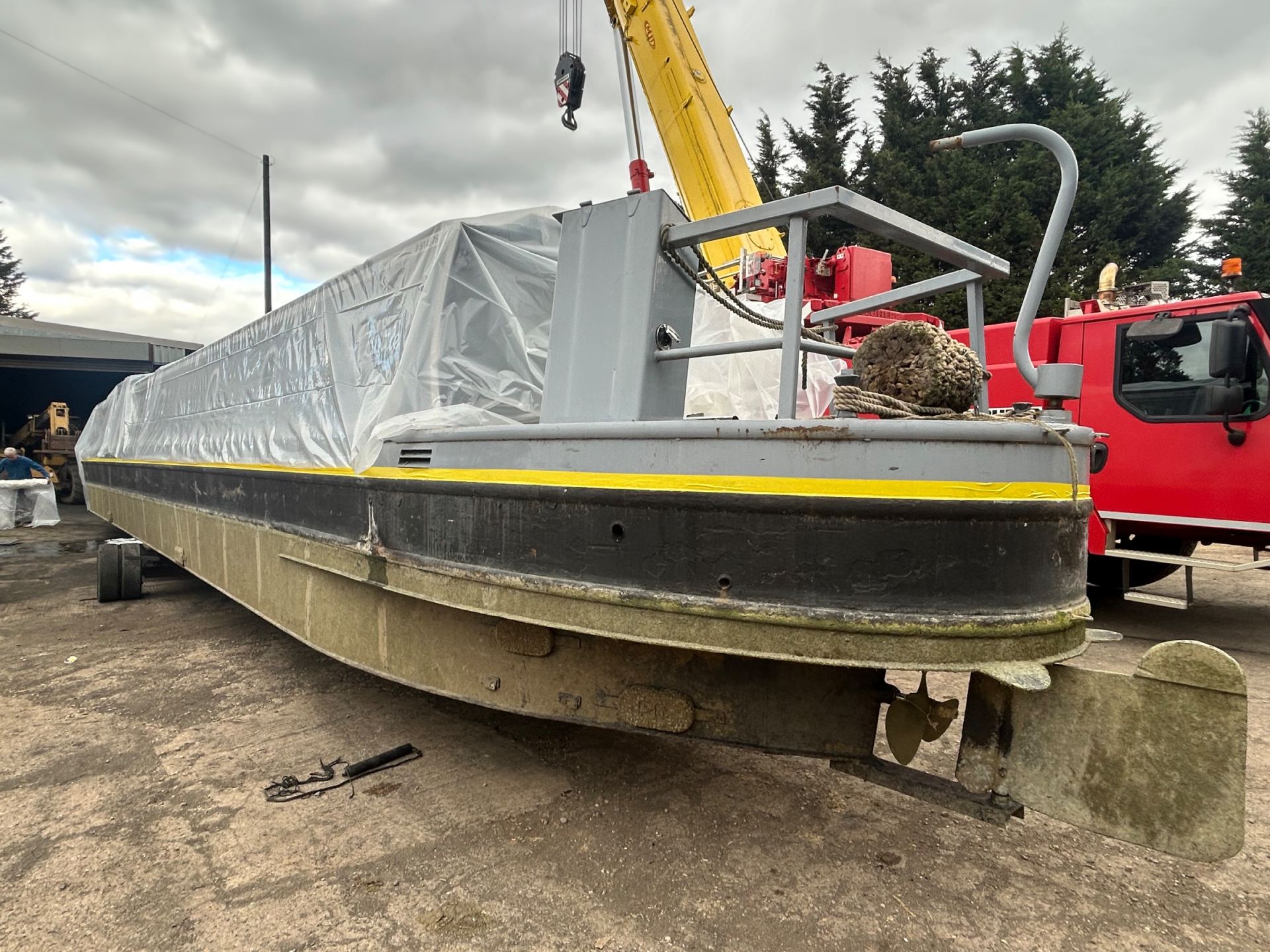
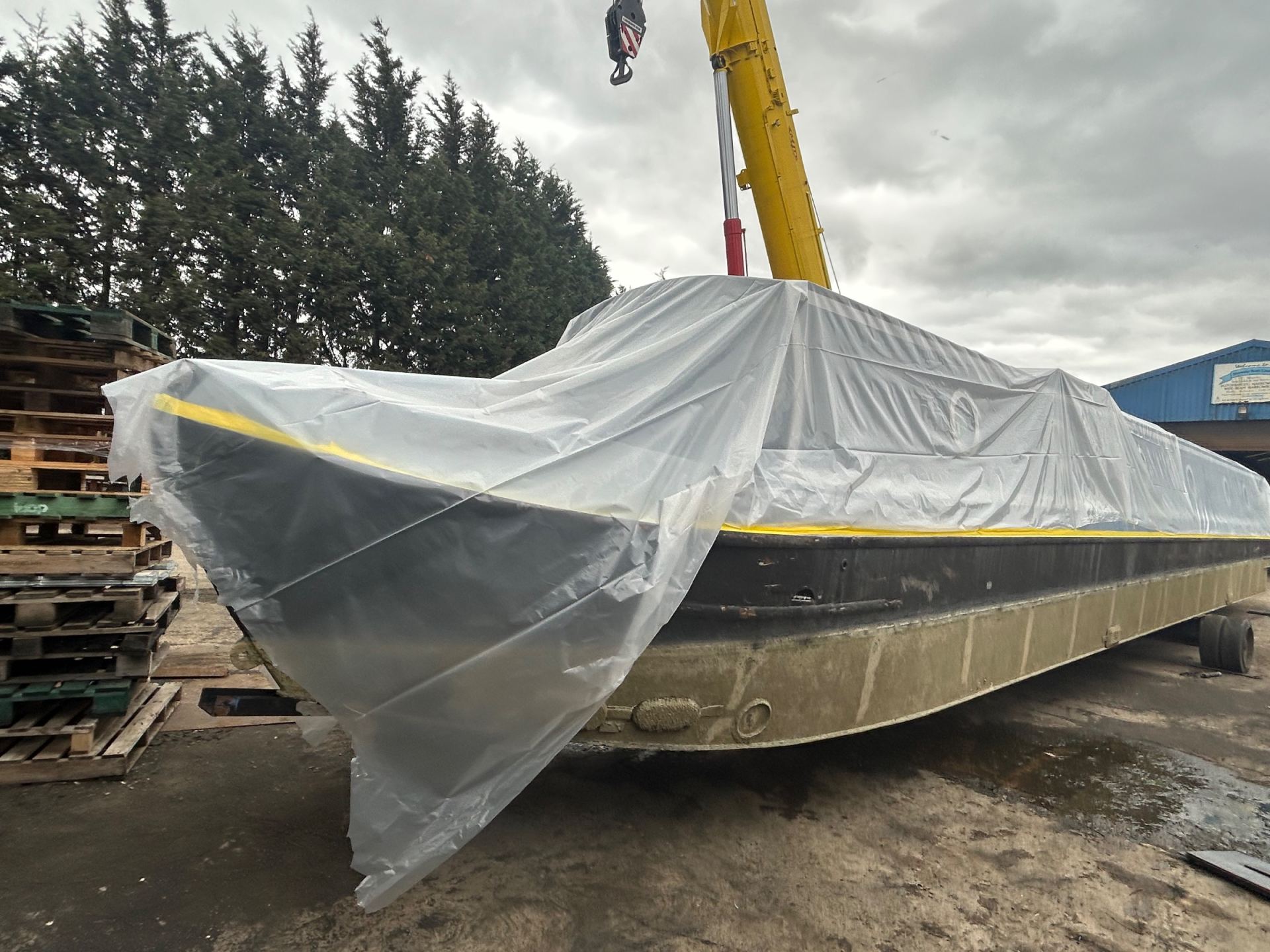
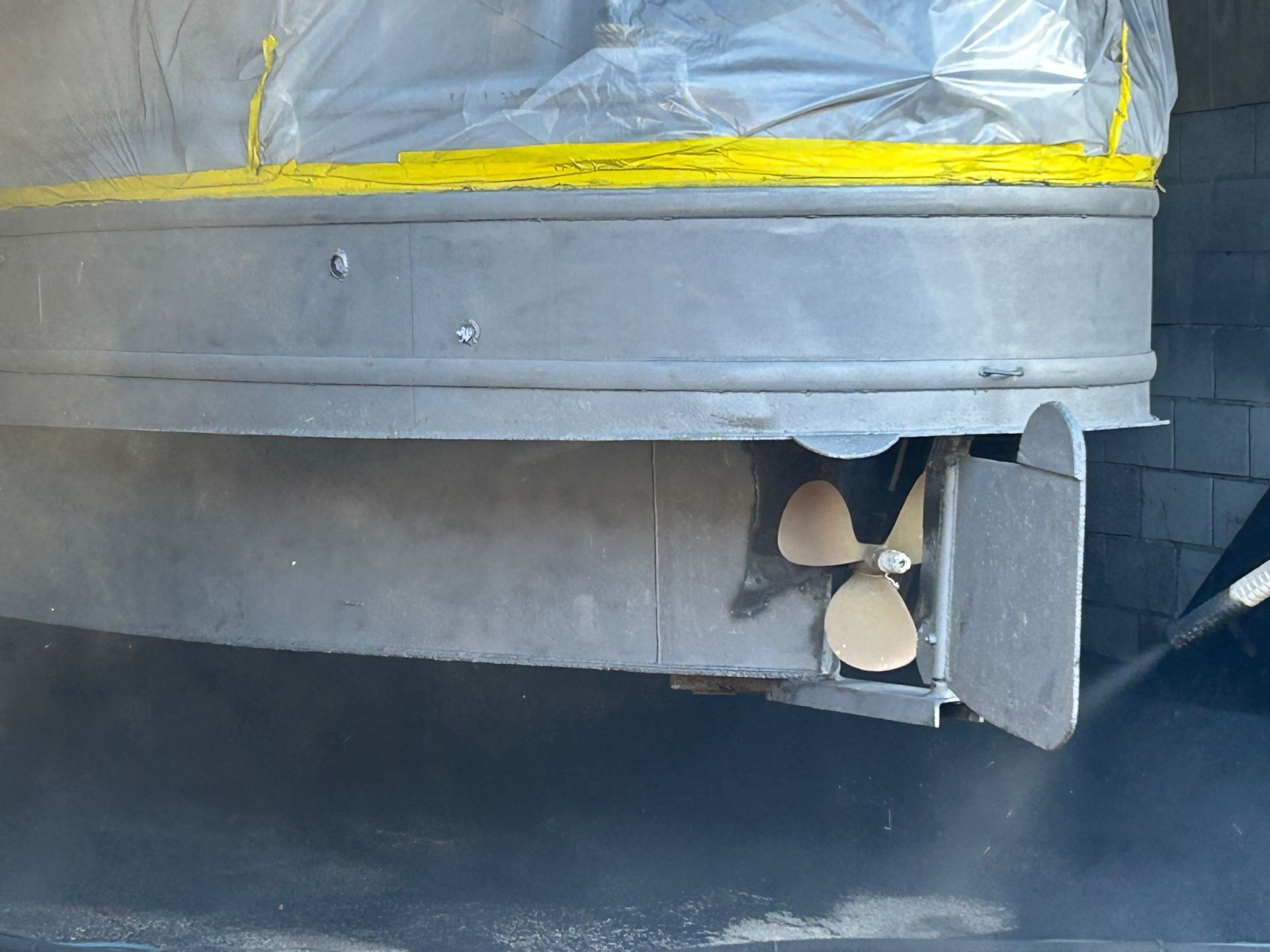
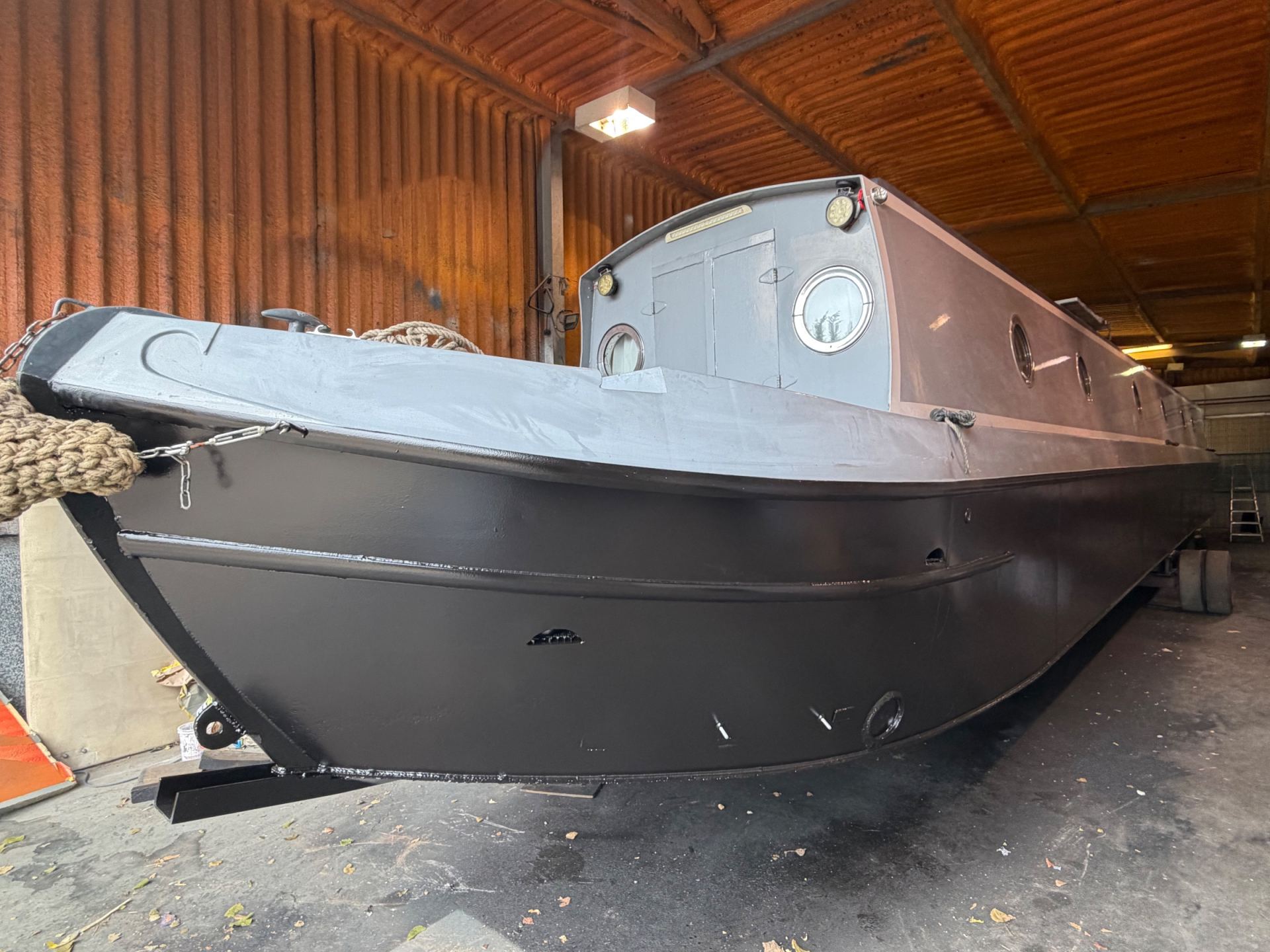
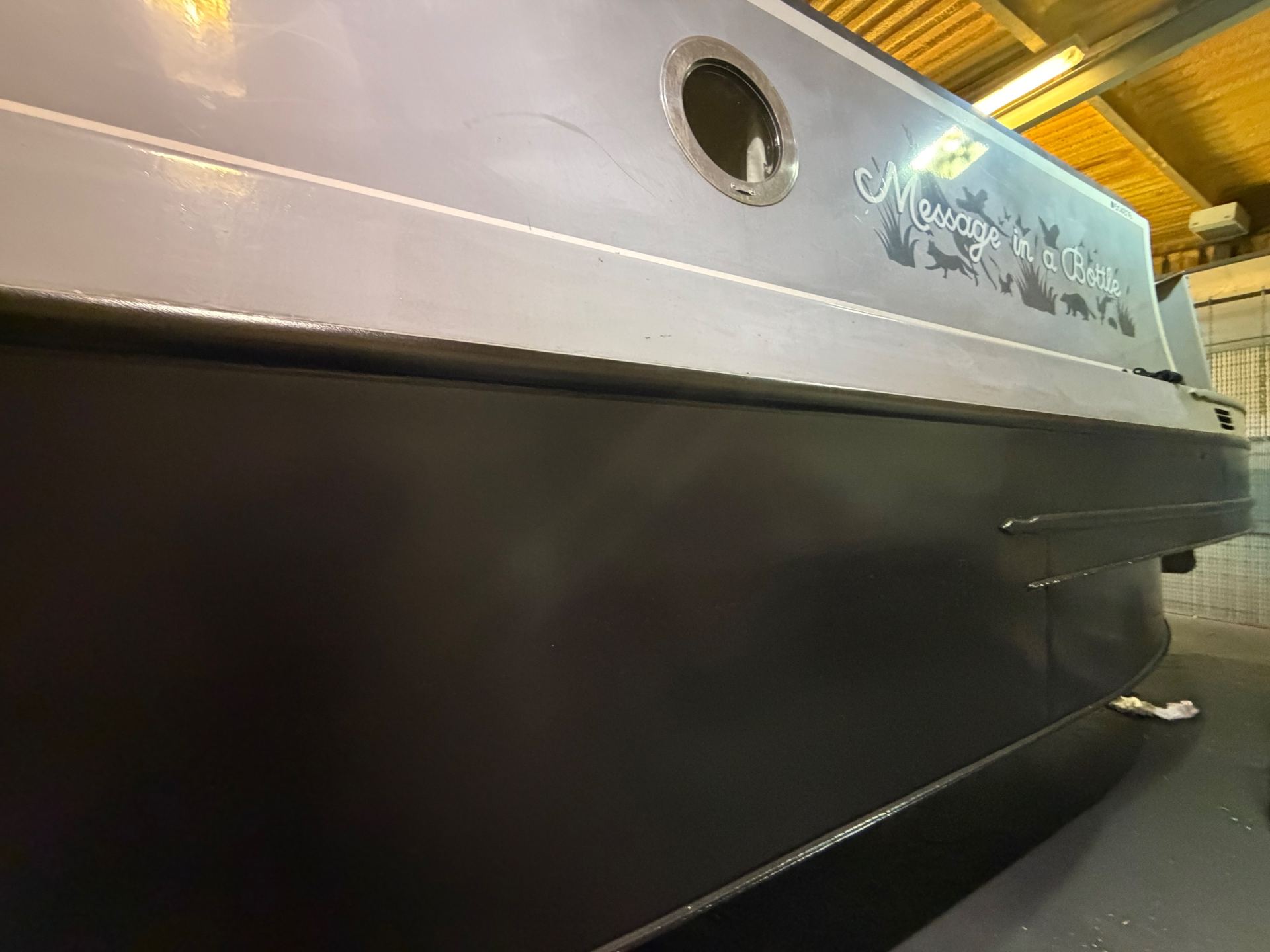
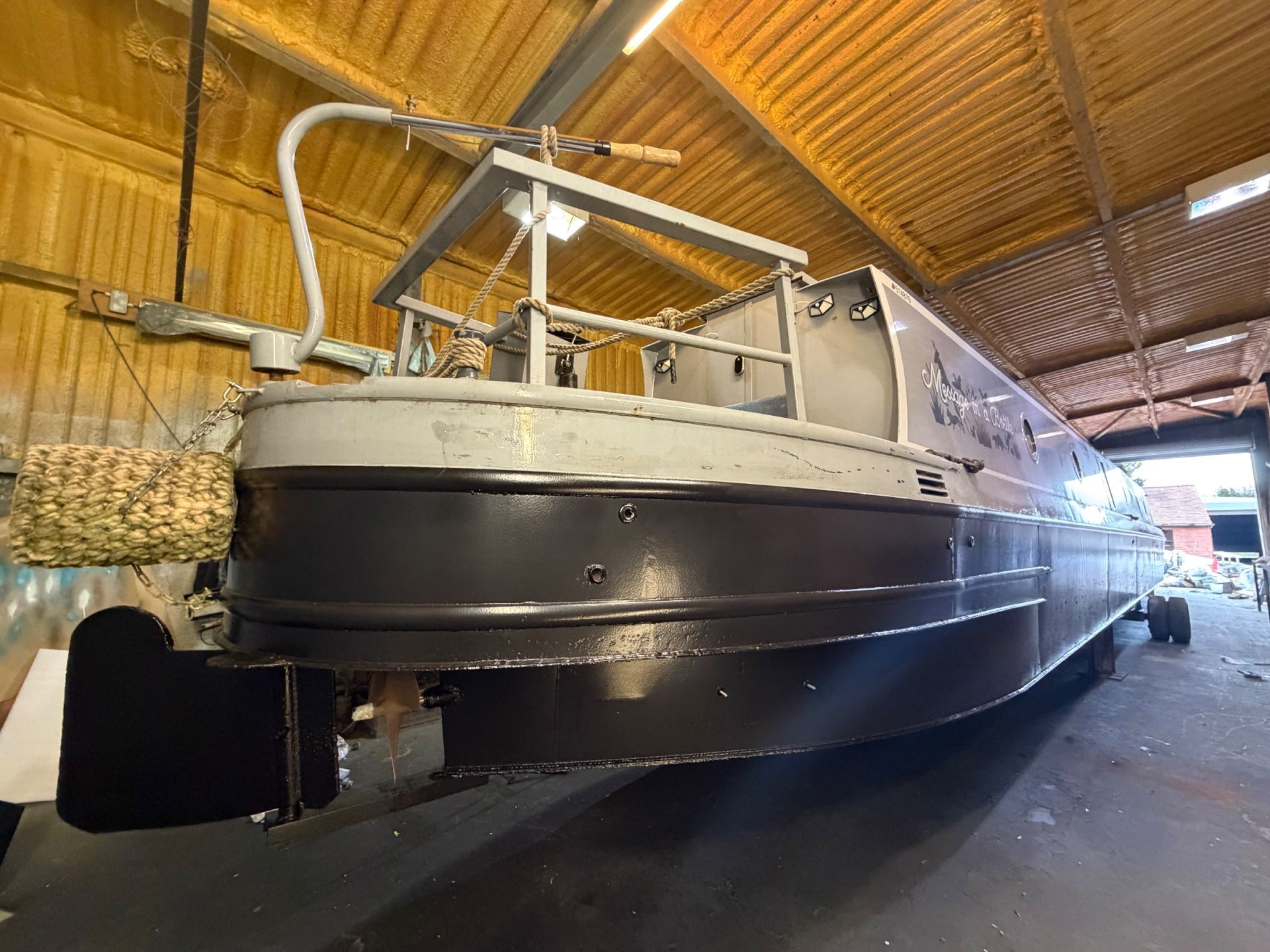
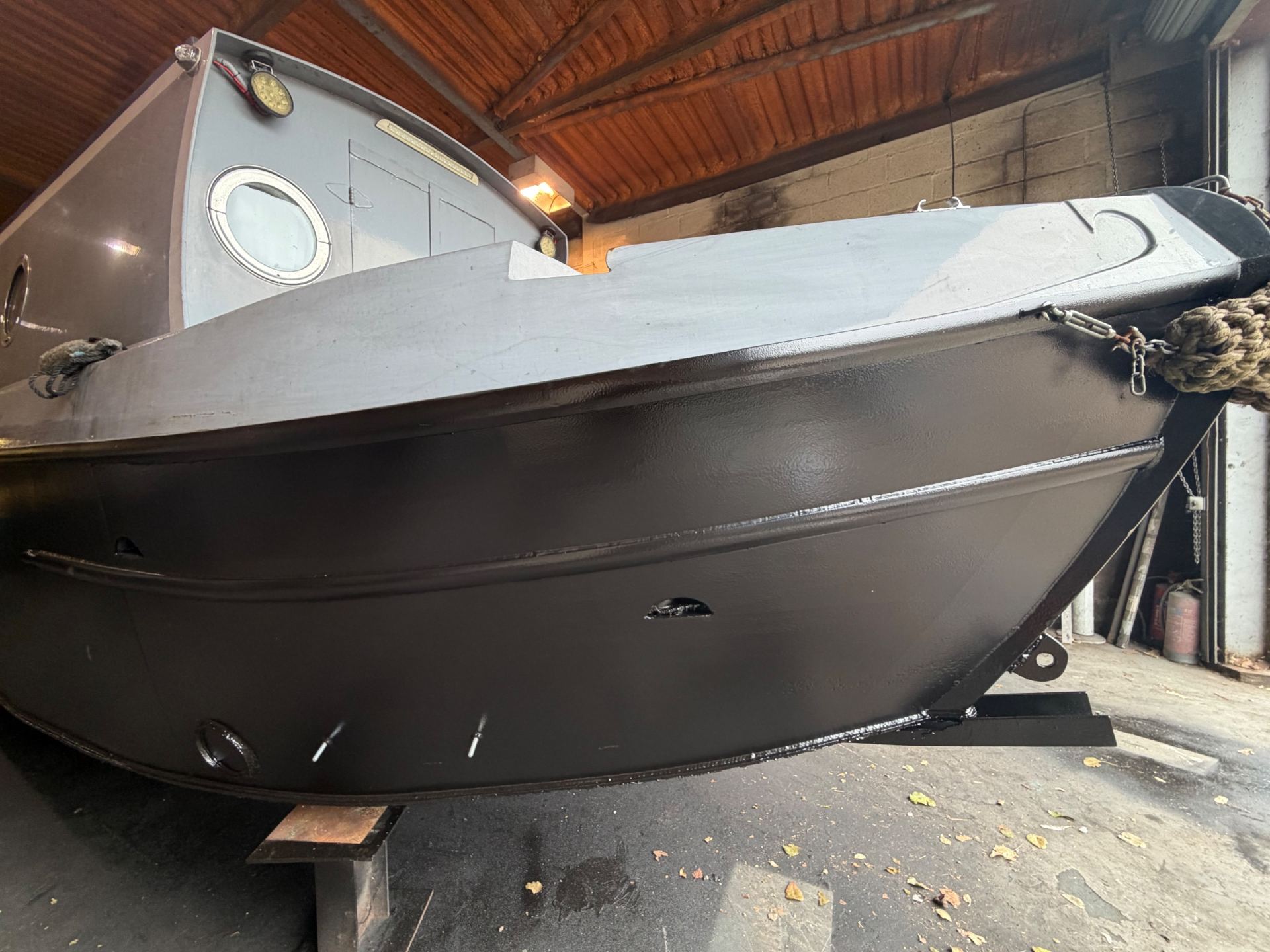
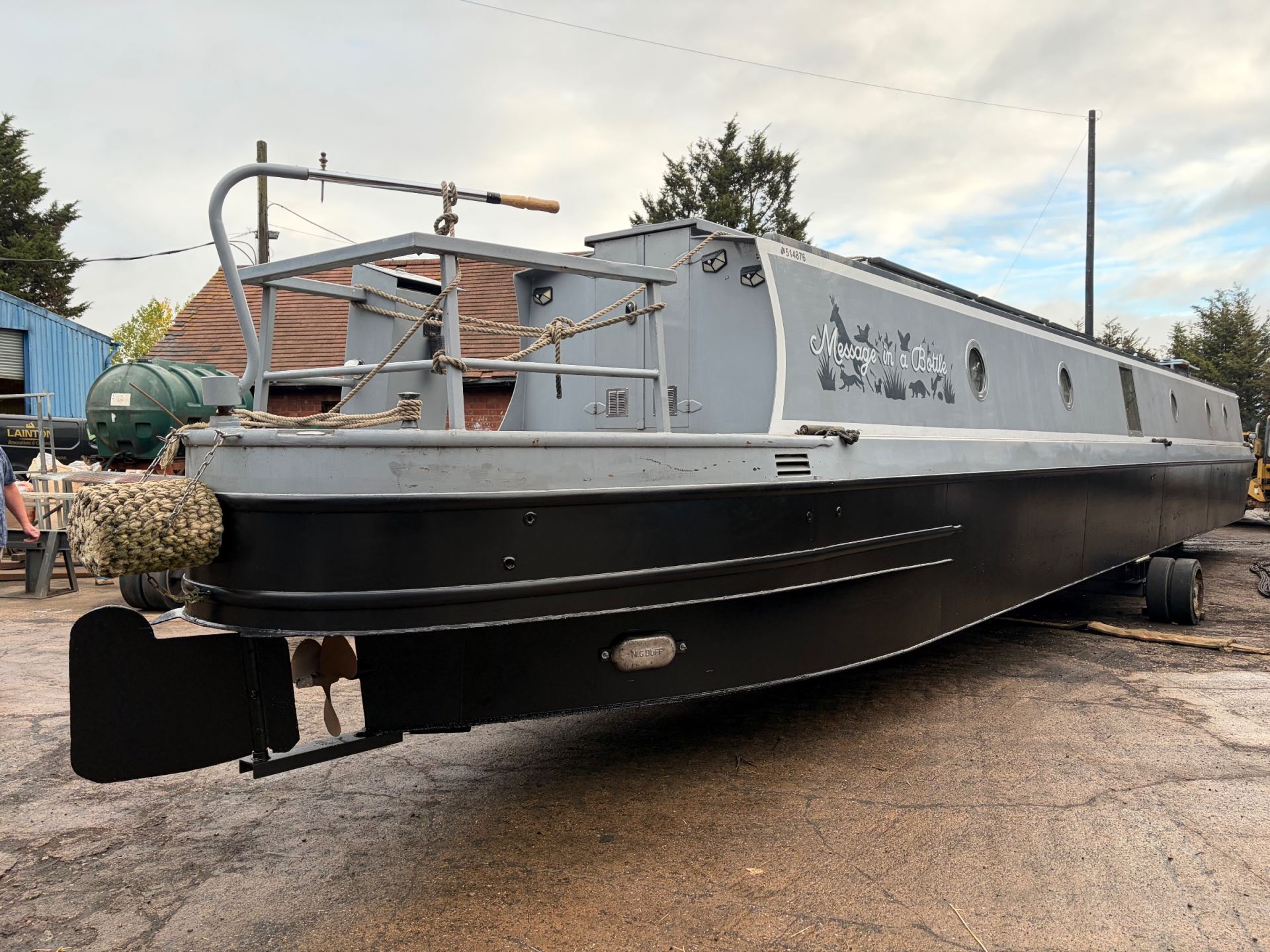
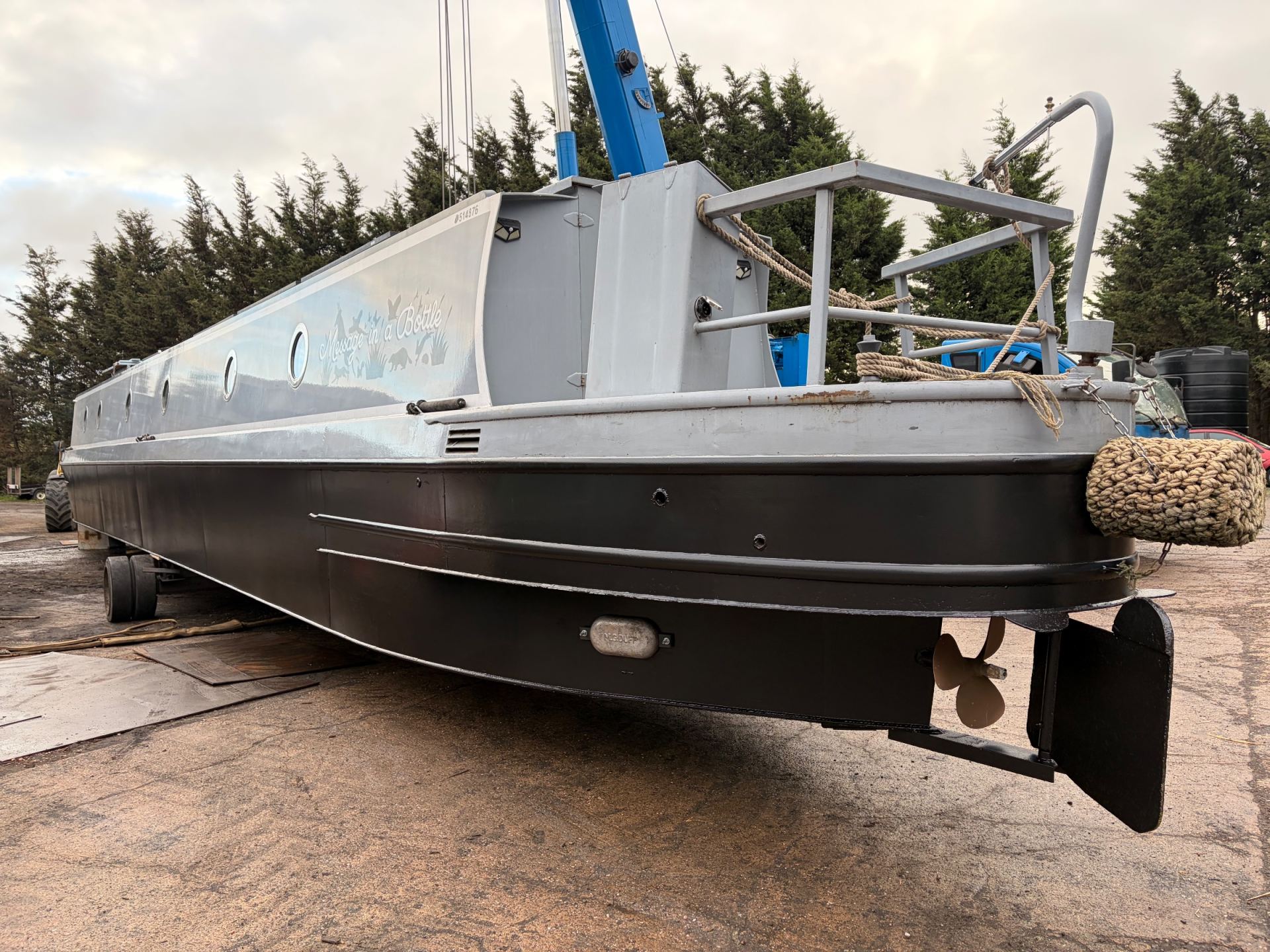
Recently, Message In A Bottle, a 2006 narrowboat, came to us for shot blasting and two-pack epoxy blacking to the hull sides and base plate.
Her new owner had recently purchased her following a pre-purchase survey, which reported pitting of around 0.3mm–1.06mm in some areas.
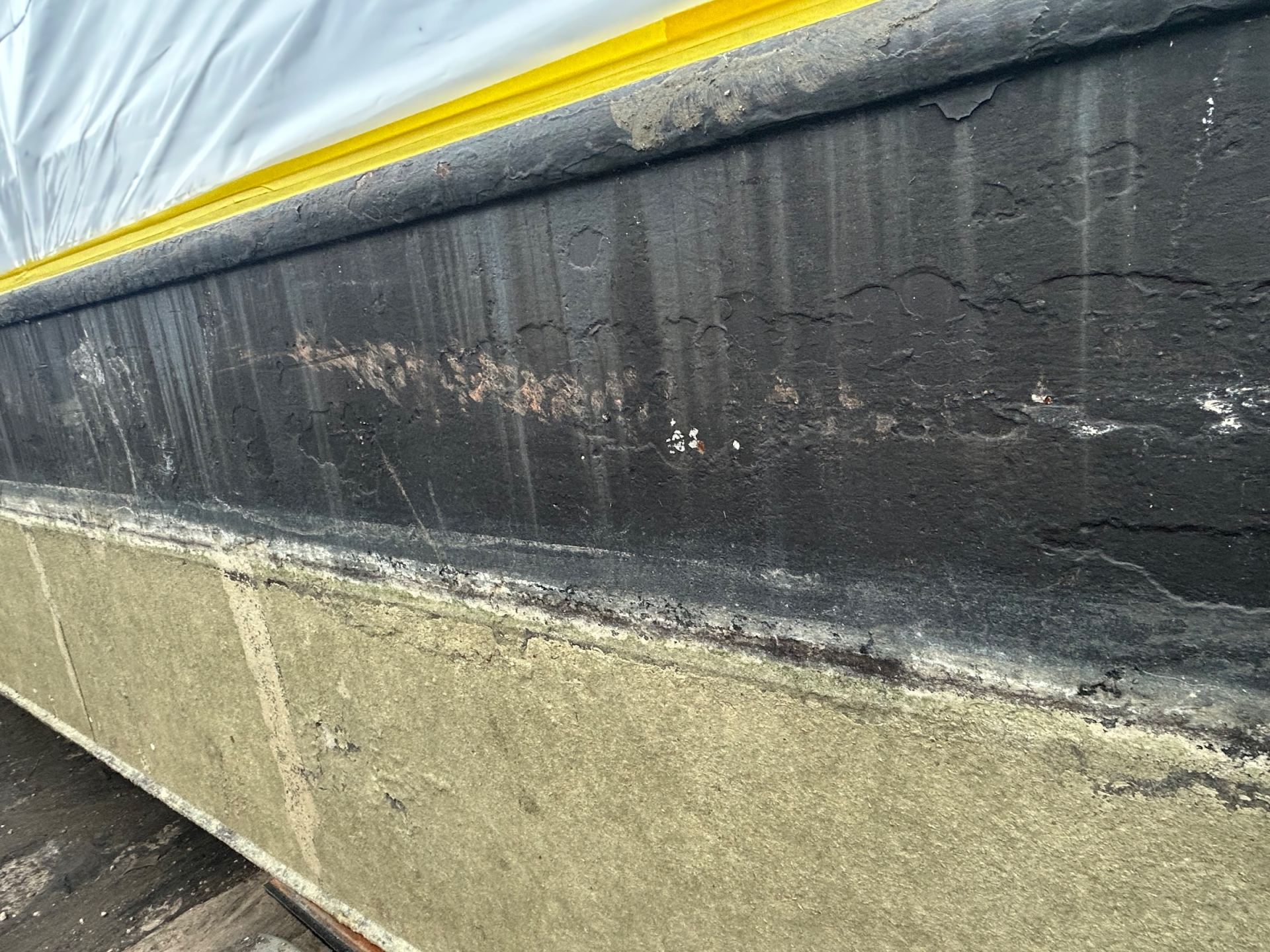
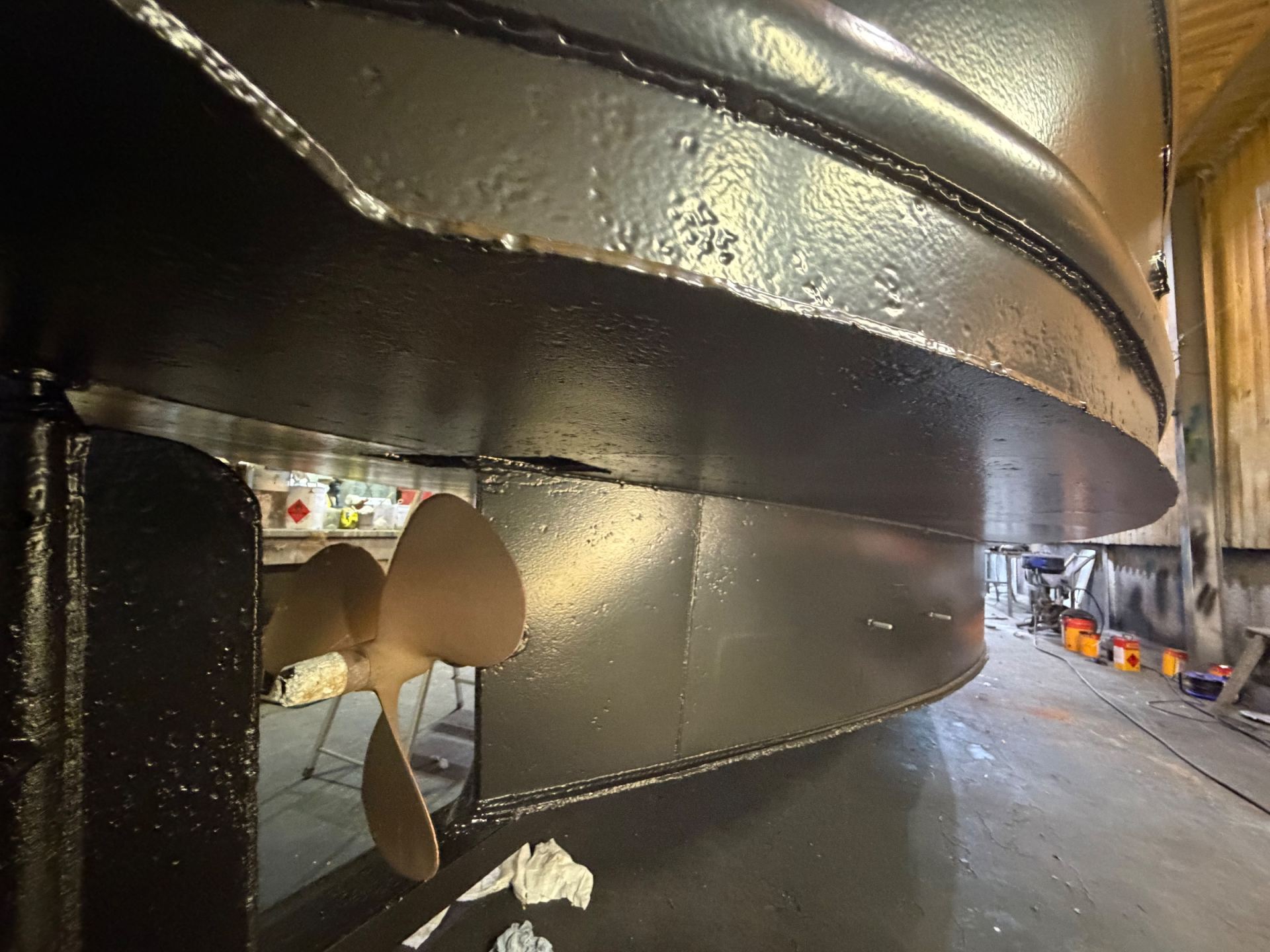
The hull sides, Uxter plate and swim plates are presently protected with what is believed to be a part-bitumen coating system above the waterline and a two-pack epoxy coating below the waterline. The coating is generally sound, with only isolated areas of breakdown noted; these should be addressed during future docking intervals. Minimal pitting was observed on the hull sides, with depths recorded between 0.3–1.06 mm.
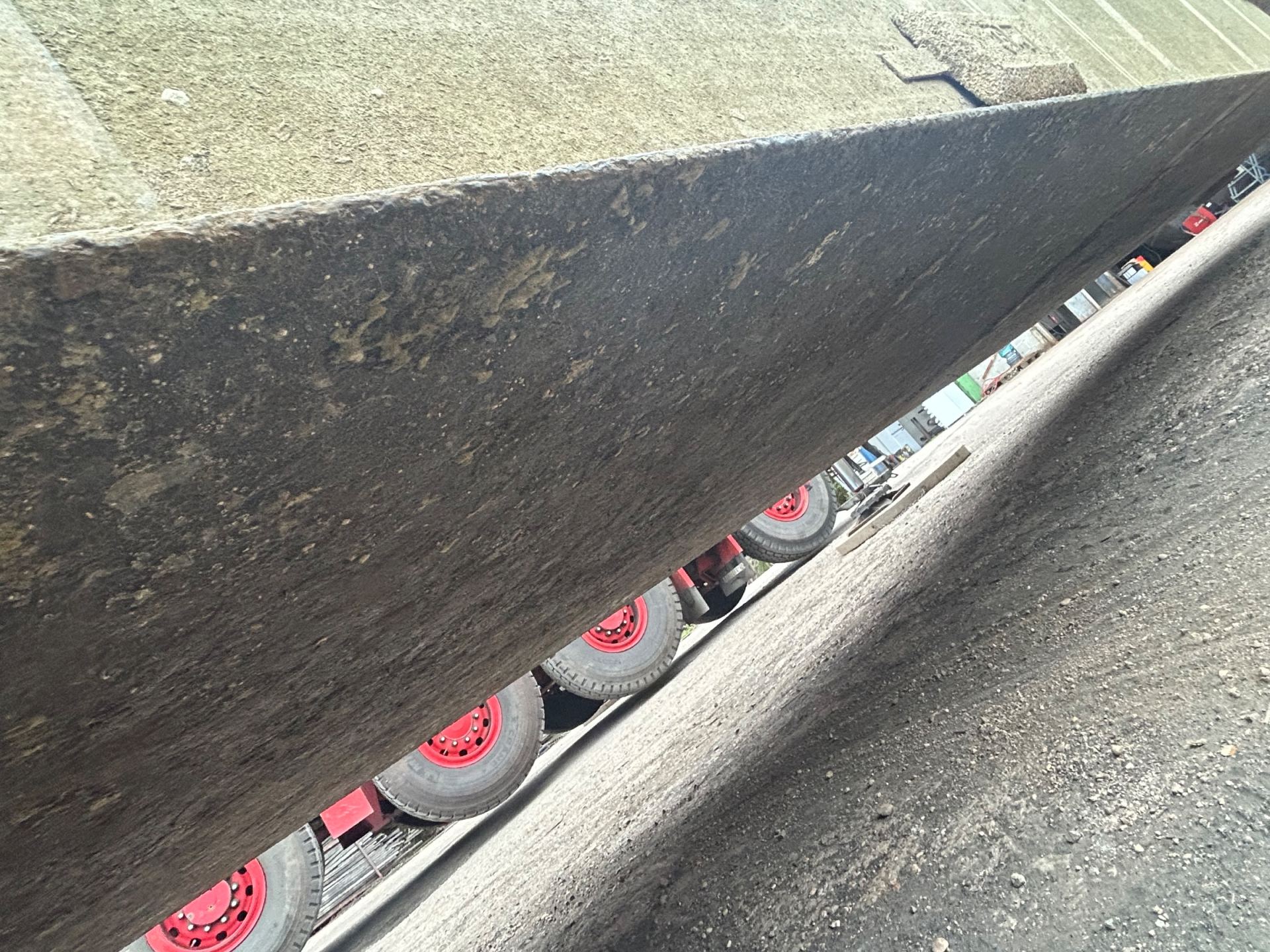
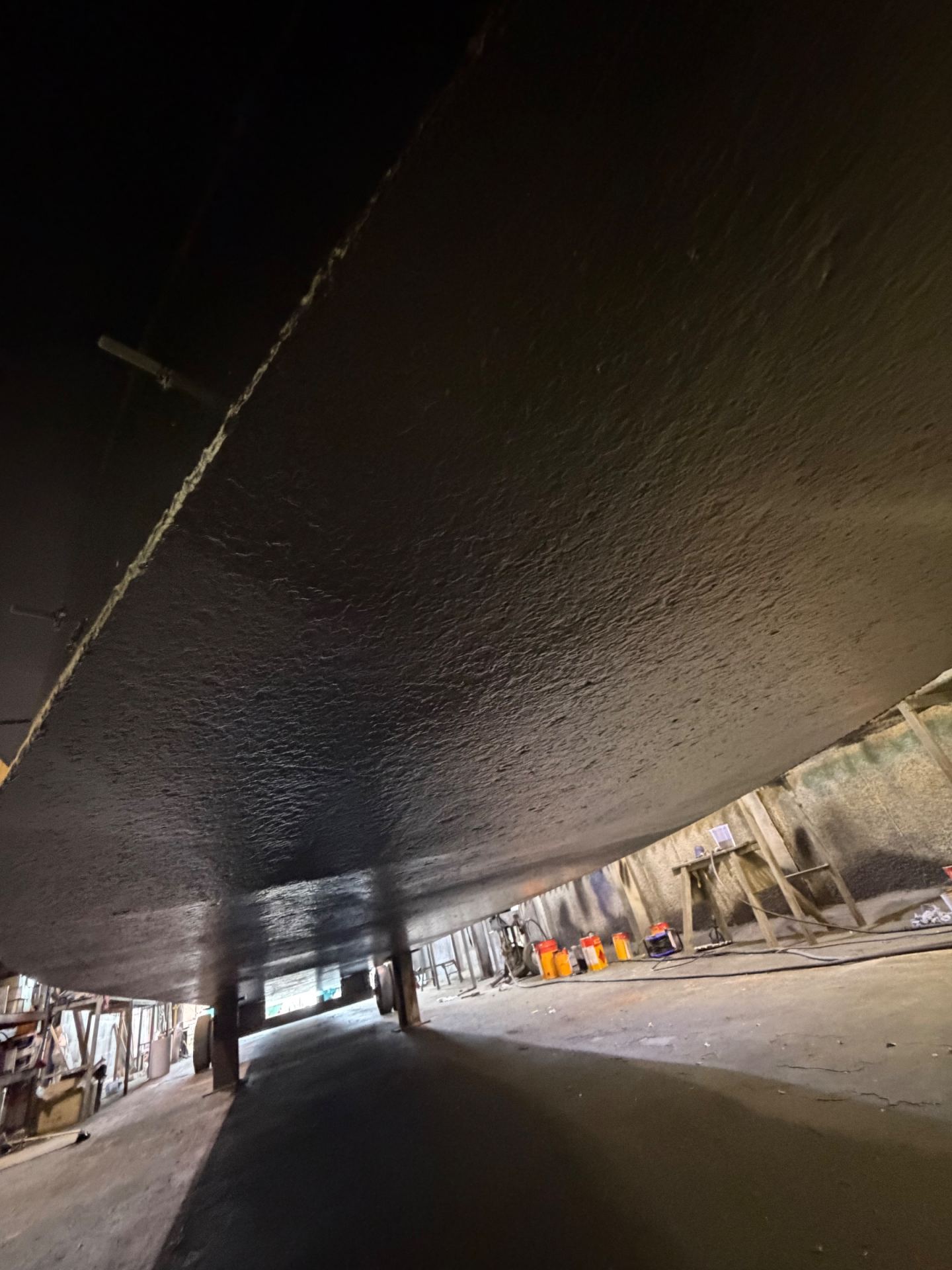
The base plate appears to be coated with a two-pack epoxy system and carries a typical layer of marine growth with areas of minor corrosion. Ultrasonic testing was limited to approximately 12 inches from the chine edge, where pitting of around 1.0 mm was recorded. The sacrificial chine edge measures up to 15 mm and is presently providing adequate protection to the adjacent side plating.
The vessel is fitted with a traditional weed hatch. Visual inspection and hammer testing confirmed the assembly to be securely fastened and in a serviceable condition at the time of survey. Ultrasonic thickness measurements were taken on the hatch plate where accessible, returning an average remaining thickness of 5.9 mm.
Advice
The hull coating should be re-applied at the next scheduled docking to reinstate full protection across all coated areas.
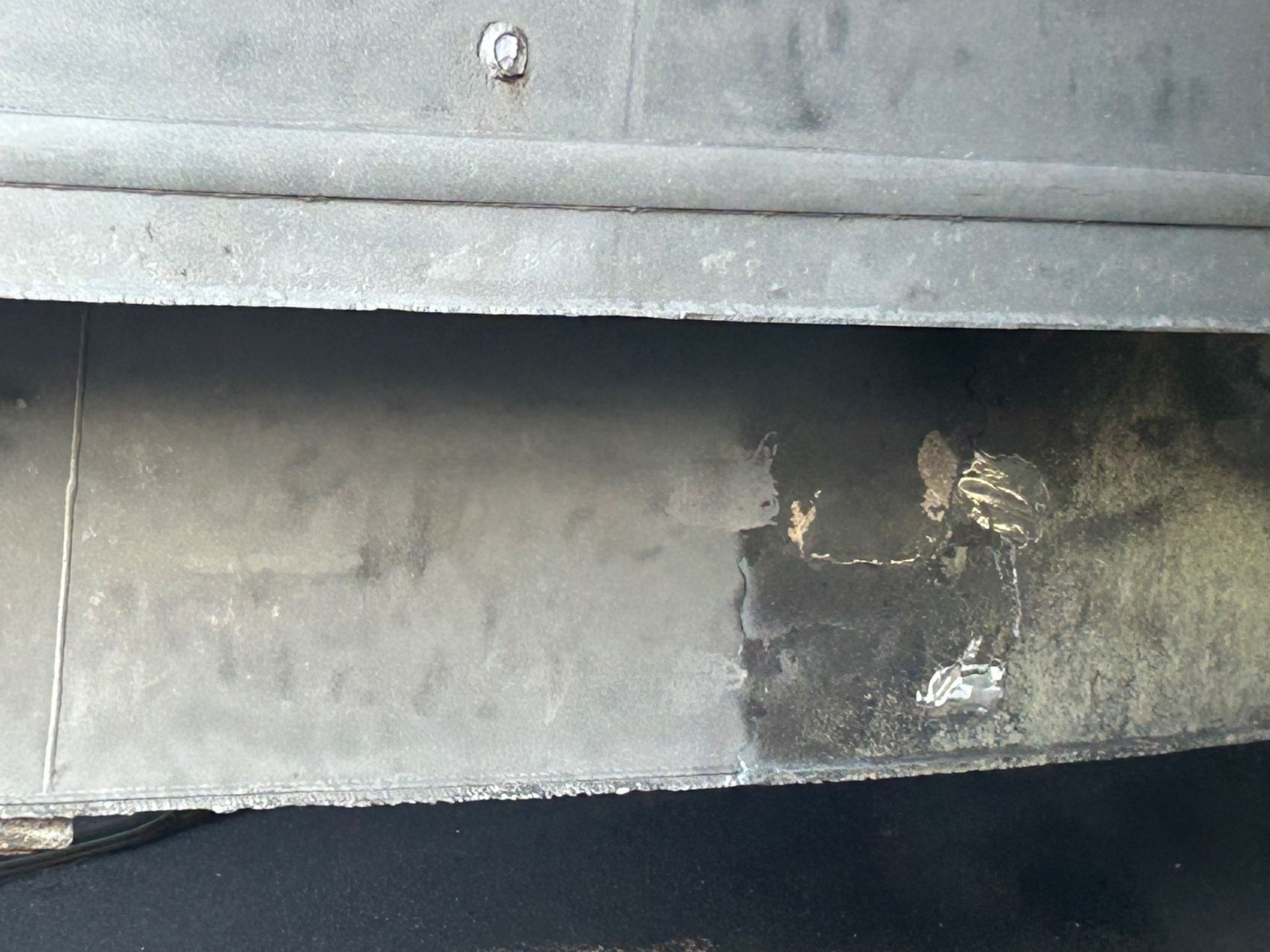
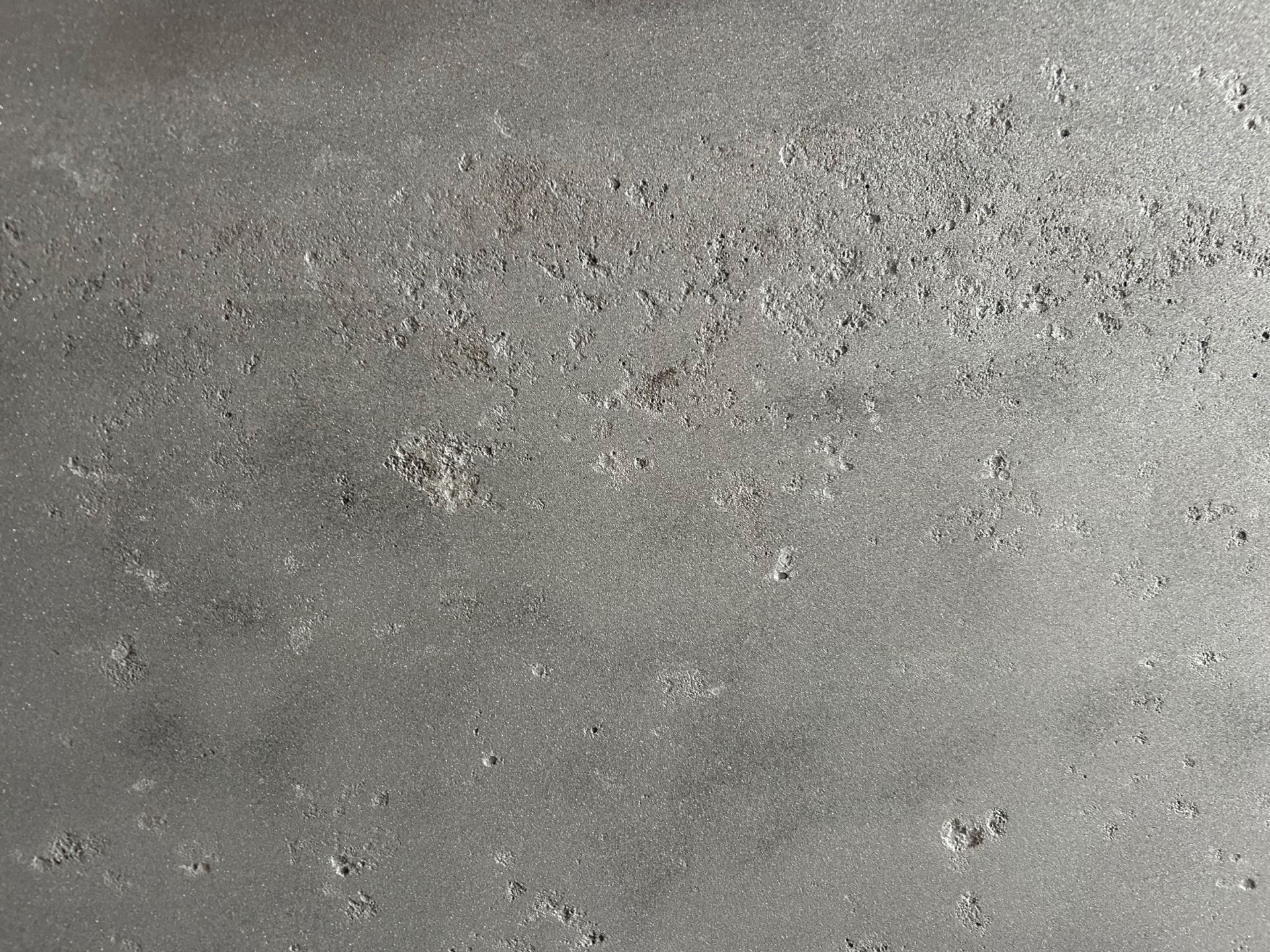
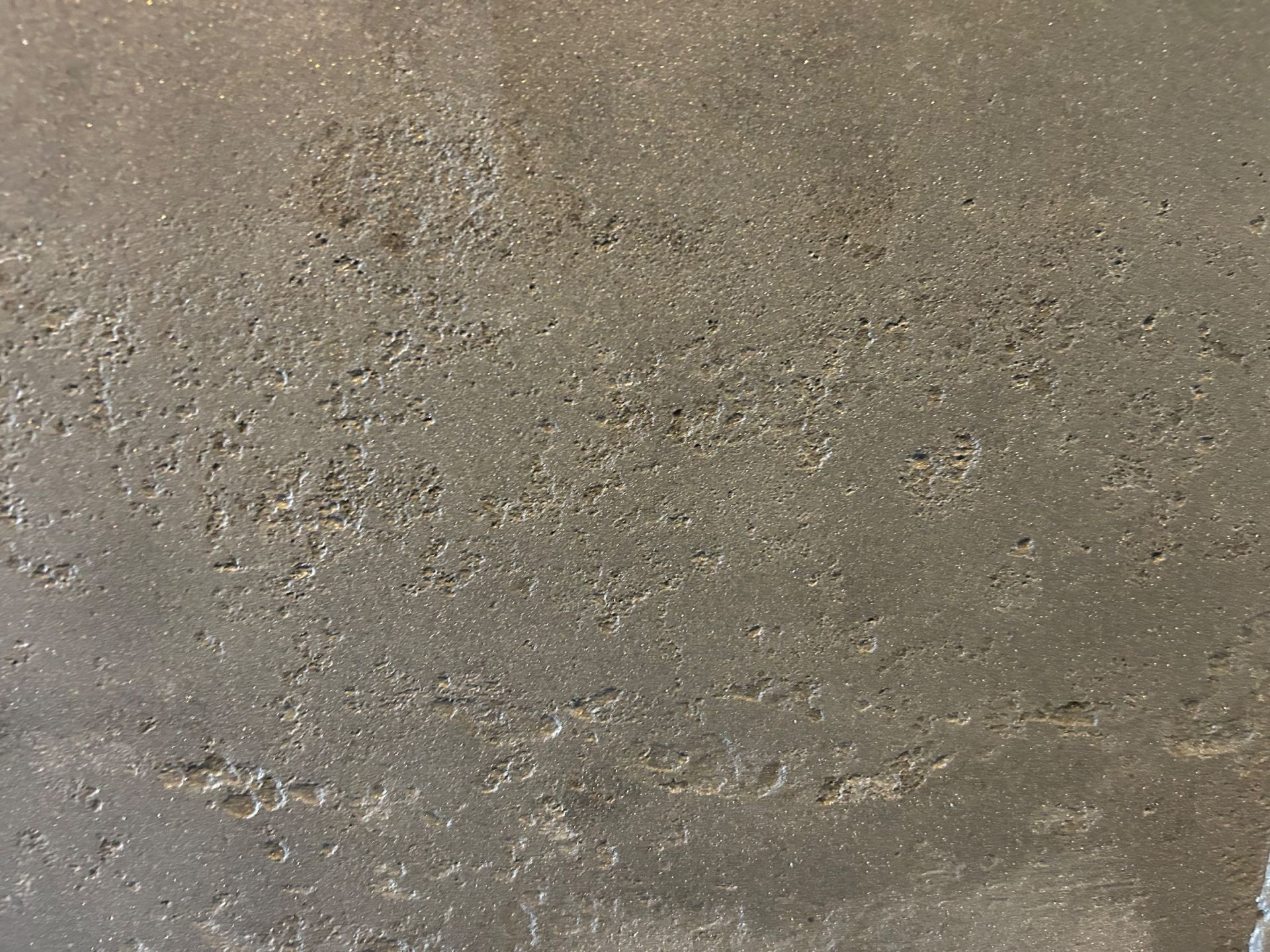
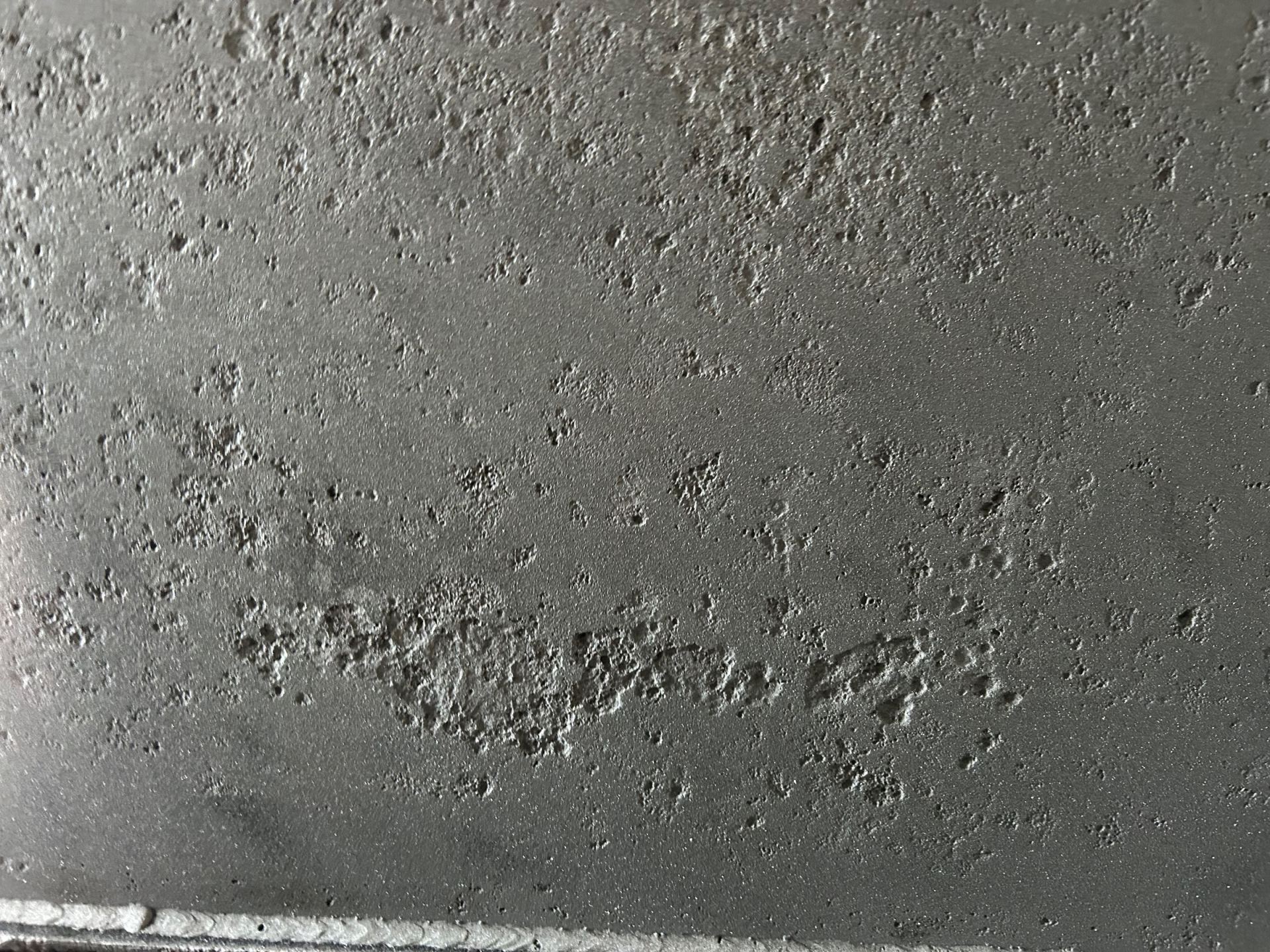
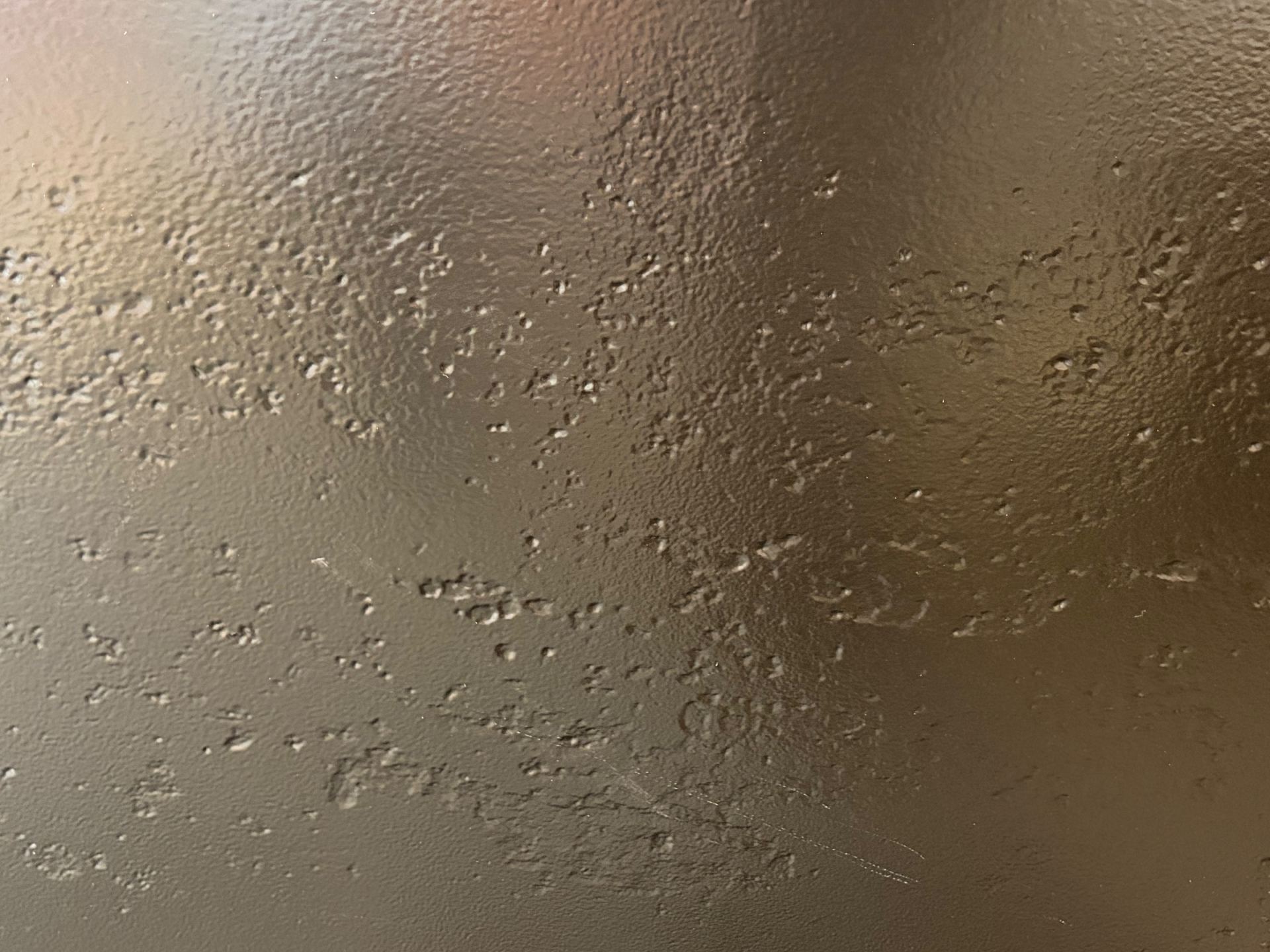
Once we shot blasted away the old bitumen, a different picture emerged. We found widespread pitting across much of the hull sides, with some pits measuring 2mm–2.2mm deep, including some covering quite large areas.
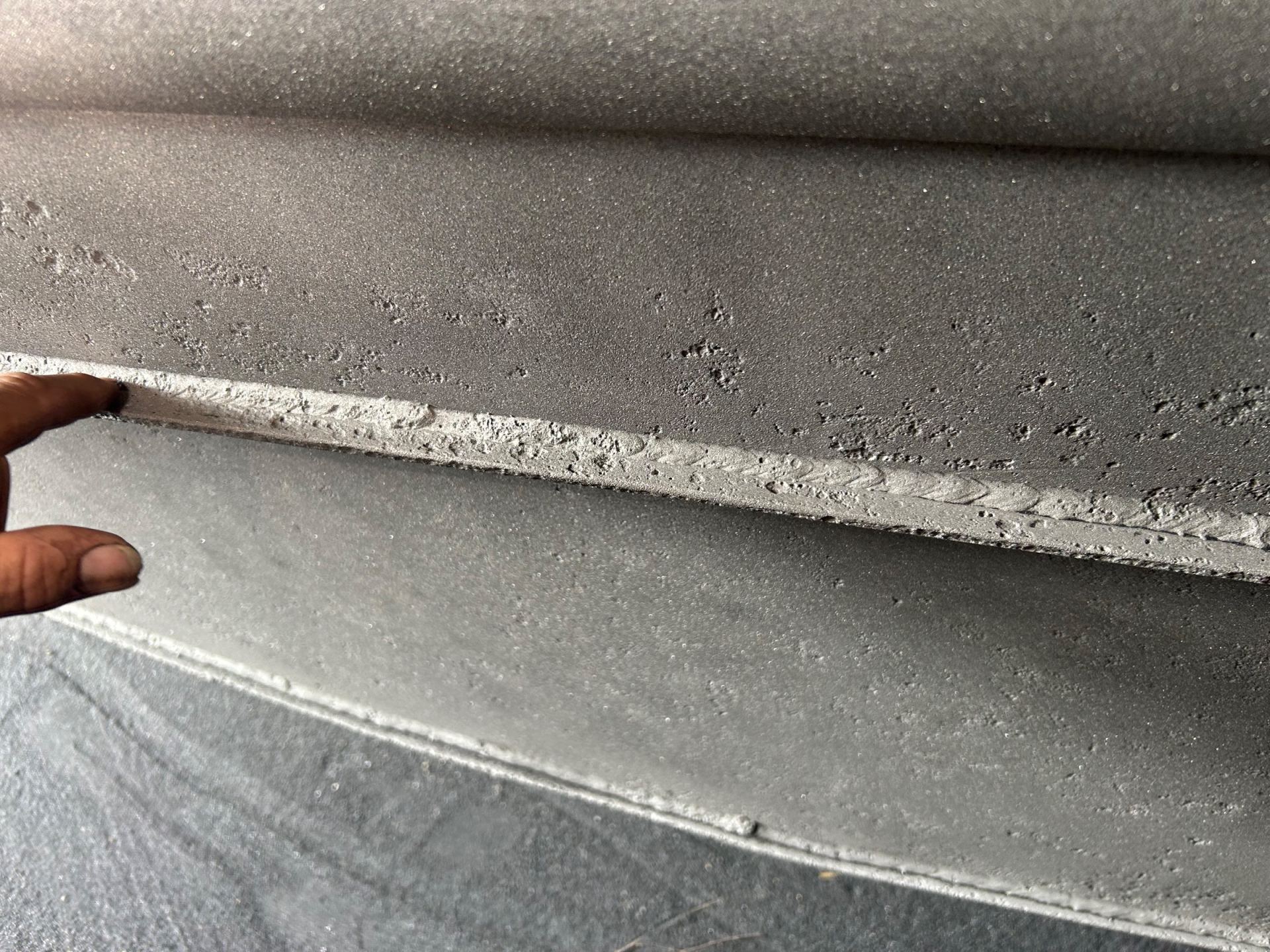
We contacted the owner, who consulted their surveyor. Following those discussions, we pit welded areas deeper than 1.8mm, along with the larger pits, before shot blasting the repaired areas again.
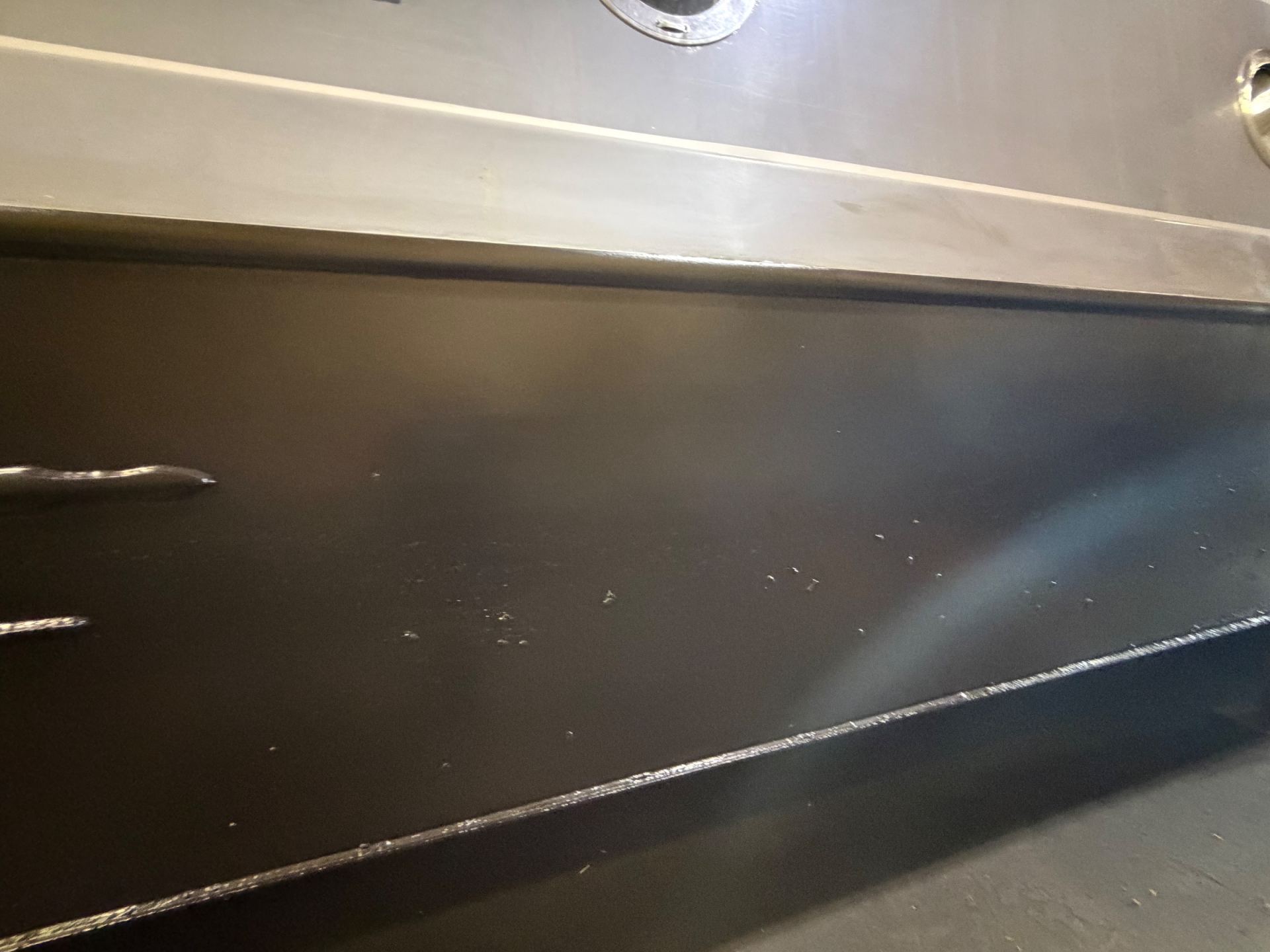
We also recommended a third coat of two-pack epoxy to help build coverage within the smaller pits and provide additional protection. Our target average coating thickness was 400 microns, and our checks showed readings well above this.
A hull survey is an important part of buying a boat, but this case shows that it may not reveal the full extent of pitting beneath existing coatings. Removing those coatings exposed corrosion that had been underestimated.
Message In A Bottle now has the repairs completed and a substantial epoxy coating to help protect her against further corrosion.
Had the new owner relied solely on the survey findings and waited until the next scheduled blacking, the corrosion could have progressed significantly. By then, the opportunity to deal with it through localised pit welding might have passed, potentially leaving much more extensive and costly steelwork repairs.
Every boat that has come to us for shot blasting and epoxy blacking has shown why the work was needed. What might be hiding beneath your boat’s coatings?
Boat: Message In A Bottle
Book your boat in →More full blast, two pack epoxy blacking & full repaint work